Brick, Concrete and Wood Each Need Different Pressure
The same machine that cleans a driveway can ruin a deck, so the surface decides the setting.
October 17, 2026 · 4 min read
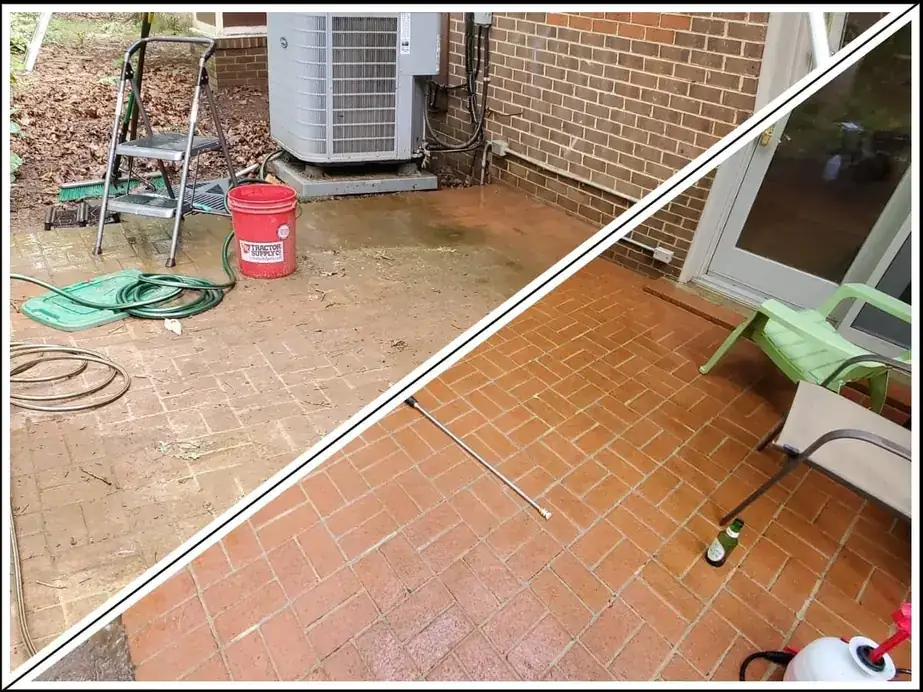
Most people think of a pressure washer as one tool with one job: point it at something dirty and the dirt leaves. In practice the machine is only half of the equation. The other half is the surface, and the surfaces around a typical Northern Virginia home could hardly be more different. A poured concrete driveway, a brick patio, a cedar fence and a pine deck all collect grime, but they react to water pressure in very different ways. Getting the setting wrong is how people end up with gouged boards or a patio that looks worse than before.
Pressure is only one of the dials. The nozzle angle, the distance from the surface, how fast the wand moves and whether a cleaning solution goes on first all change the outcome. A wide fan nozzle held a foot and a half away behaves nothing like a narrow tip held six inches away. Experienced crews pick a combination for each material, test a small spot, and adjust. That test patch matters more than the number on the machine.
Concrete driveways and walks
Concrete is the toughest surface on most properties. It can take real pressure, which is why driveways and sidewalks are the classic pressure washing job. Oil from a parked car, tire marks, mud and the grey-green film that builds up in shaded spots all respond well. The technique that separates a good job from a streaky one is keeping the wand moving in even, overlapping passes. Stop for a second in one place and you can leave a clean stripe against a dull background.
Concrete is porous, though, and it is not invincible. Too close with a narrow tip can etch the surface and expose the stone in the mix. Older, weathered concrete is softer than new. The goal is to lift the dirt, not to remove a layer of the driveway.
Brick, block and stone
Brick looks sturdy, but the mortar between the bricks is the weak point. Hard water forced at old mortar joints can wash sand out of them, leaving the lines hollow and inviting water in. Brick faces themselves can also be damaged if the outer skin is already worn. For patios and walkways, a lower pressure with a cleaning solution that does the work chemically is usually the better route, followed by a careful rinse.
Block and natural stone are similar. They hold moisture, so they grow green and black film readily in shaded corners. Hall Son's lists brick, block, concrete and stone together in their pressure wash service, and their patio photo makes the point well: a brick patio split on a diagonal, one half dull and mottled, the other half visibly cleaner. That kind of result comes from patience with the wand, not from raw force.
Wood decks, stairs and fences
Wood is the surface where the wrong setting does the most harm. The grain has soft and hard bands, and a strong stream digs into the soft ones first, leaving a fuzzy, ridged look that catches dirt and splinters bare feet. Pressure that is fine for concrete is far too much for a deck. The better approach is low pressure, a wide fan, a cleaning solution that loosens the grey surface and a gentle rinse that follows the grain of the boards.
Fences work the same way, and vertical pickets are especially easy to scar. Keep the stream moving and keep the distance generous. If the wood is already soft or splintering, cleaning will not fix that, and a board or two may need replacing before anything else is done.
What to expect when a crew arrives
A good visit follows a rhythm, and knowing it helps you prepare.
- A walk around the surfaces, so the crew can see what each one is made of and how worn it is.
- A test patch in a low-visibility spot before the full pass begins.
- Pre-treatment of heavy stains or growth, which needs a few minutes to work.
- The cleaning pass in even, overlapping strokes, usually working from the highest point down.
- A rinse that pushes runoff away from the house and away from your plants.
Move furniture, planters and toys off the area beforehand and keep pets inside. If a surface will need sealing or staining afterwards, say so in advance, because that affects how long it must dry.
Asking for a look first
If you are not sure what your surfaces can take, that is exactly what an estimate visit is for. Hall Son's Services does pressure washing across brick, block, concrete, stone and wood in Northern Virginia, and every job begins with a free estimate. Call or text 571-336-2395 and ask for a FREE Estimate.
Hall Son's Services, 571-336-2395
Call 571-336-2395